Our technology
Clearer pictures, calmer visits
Every tool in our treatment rooms earns its place by doing one of three things: helping us see more, making care more comfortable, or helping you understand your options.
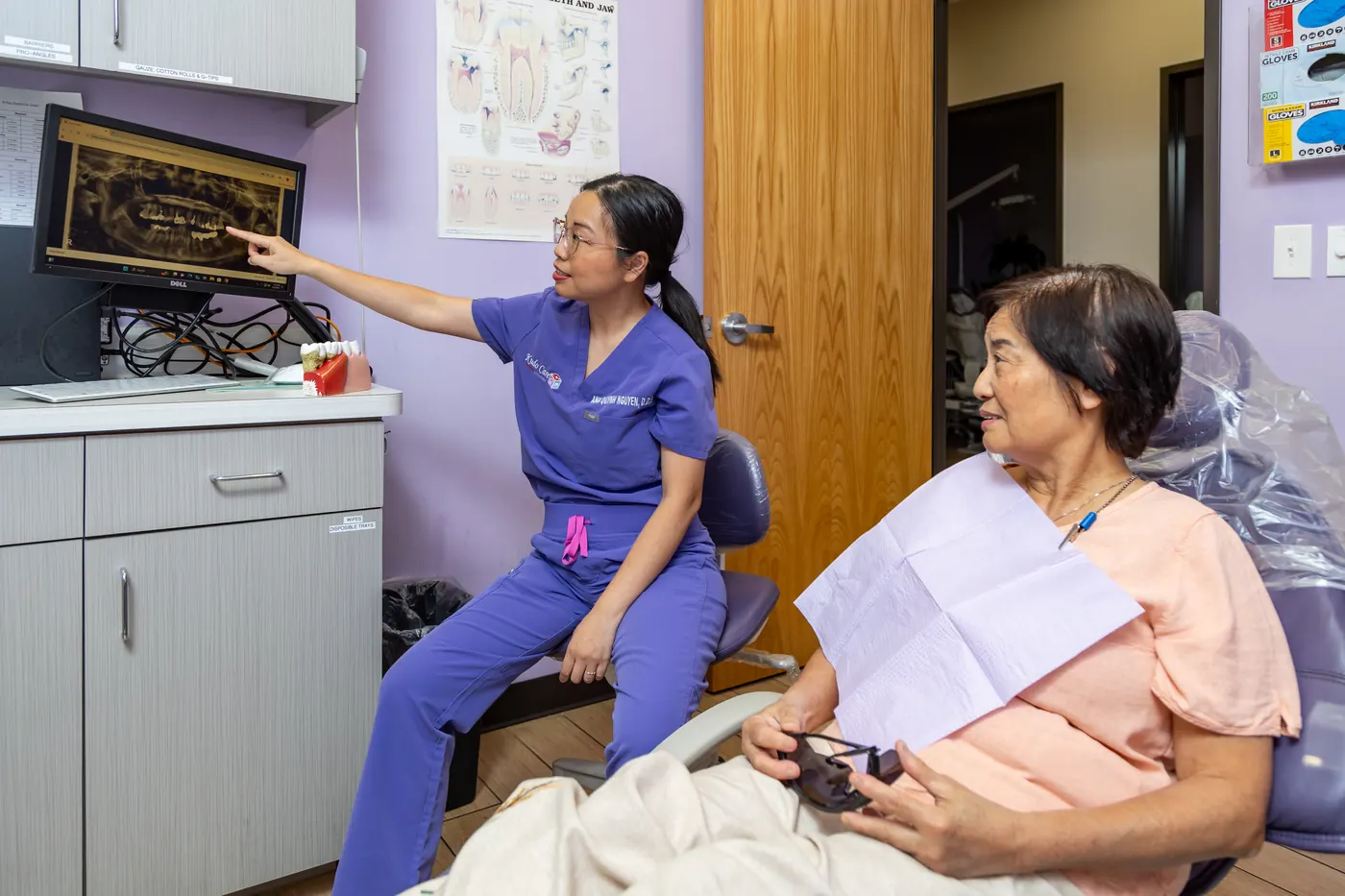
3D CBCT imaging
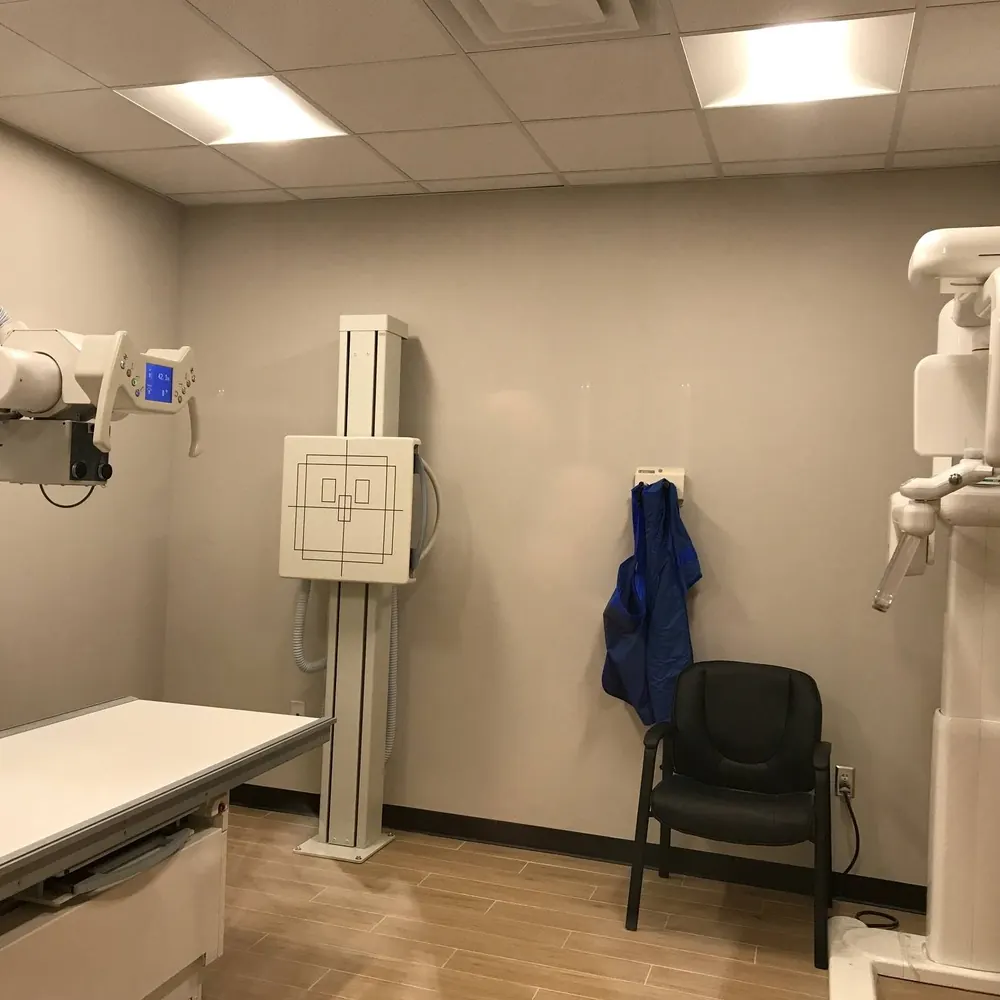
A cone beam CT (CBCT) scan takes a three-dimensional picture of your teeth, jawbone, nerves and sinuses in a single, quick rotation. Regular x-rays are flat; CBCT shows depth — how wide the bone is, exactly where a nerve runs, how close a wisdom tooth root sits to it.
We use it when that depth matters: planning implants, assessing impacted wisdom teeth, and looking into complicated root canal cases. It isn’t needed at every visit, and we’ll tell you why when we recommend one.
Digital x-rays with sensor plates
Instead of film, a thin digital sensor captures the image and sends it straight to the screen. That means no waiting for film to develop, images we can enlarge to show you a cavity between teeth, and a lower radiation dose than traditional film x-rays.
How often you need x-rays depends on your history and risk — the American Dental Association recommends spacing them based on each patient’s needs rather than a fixed schedule, and that’s how we do it.
Digital impressions
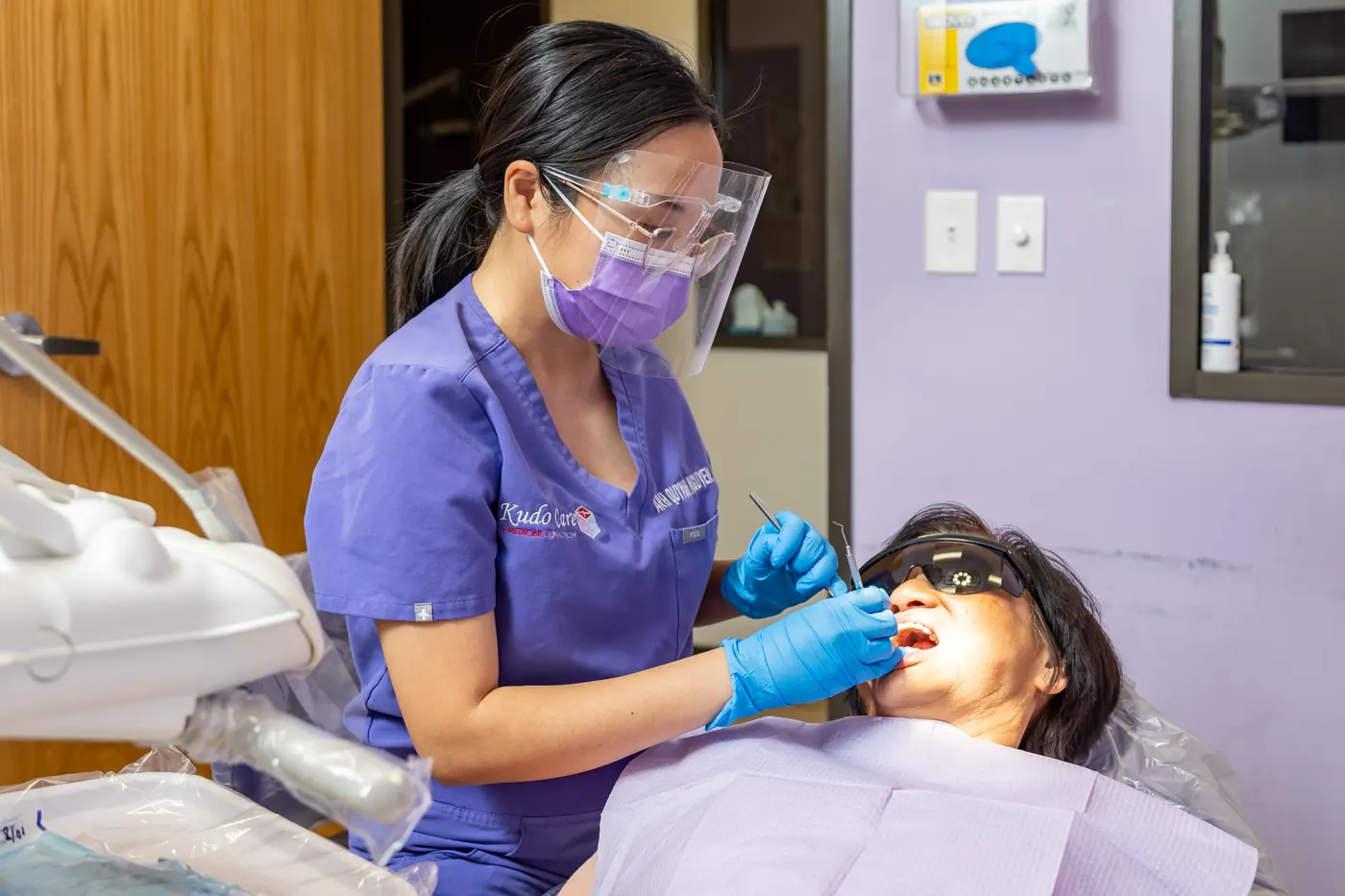
If you’ve ever bitten into a tray of impression putty and waited for it to set, you’ll appreciate this one. A small wand scans your teeth and builds an accurate 3D model in minutes.
We use digital impressions for crowns, bridges and other restorations. They’re more comfortable — especially if you have a strong gag reflex — and easy to re-take if needed.
Intraoral camera
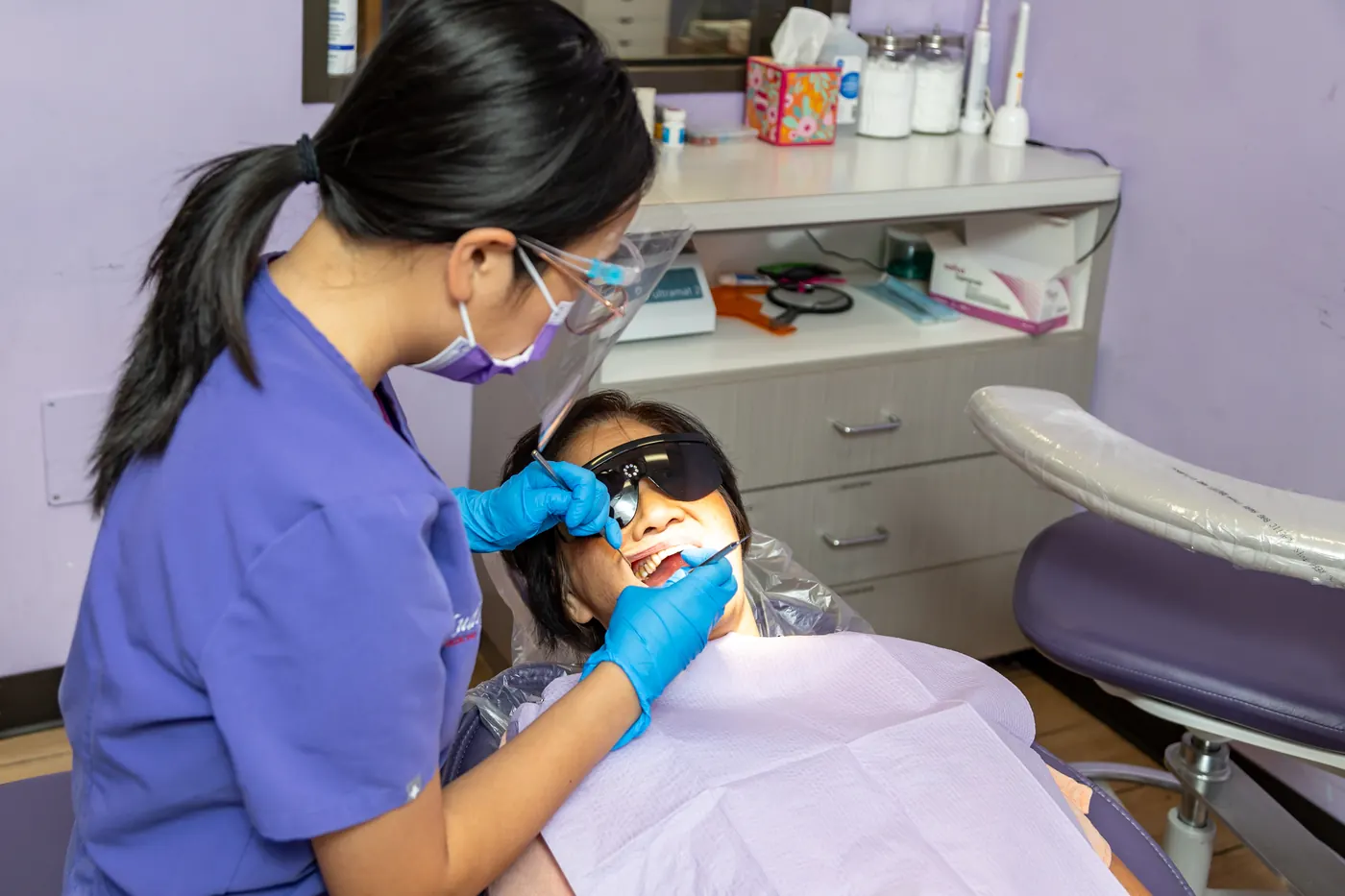
A pen-sized camera shows a close-up of your tooth on the screen in front of you. Cracks, worn fillings, early decay and gum inflammation are much easier to understand when you can see them.
It’s also how we keep a visual record of small issues we’re watching, so we can compare at your next visit instead of guessing.
A-dec chairs, piezo scalers and electric handpieces
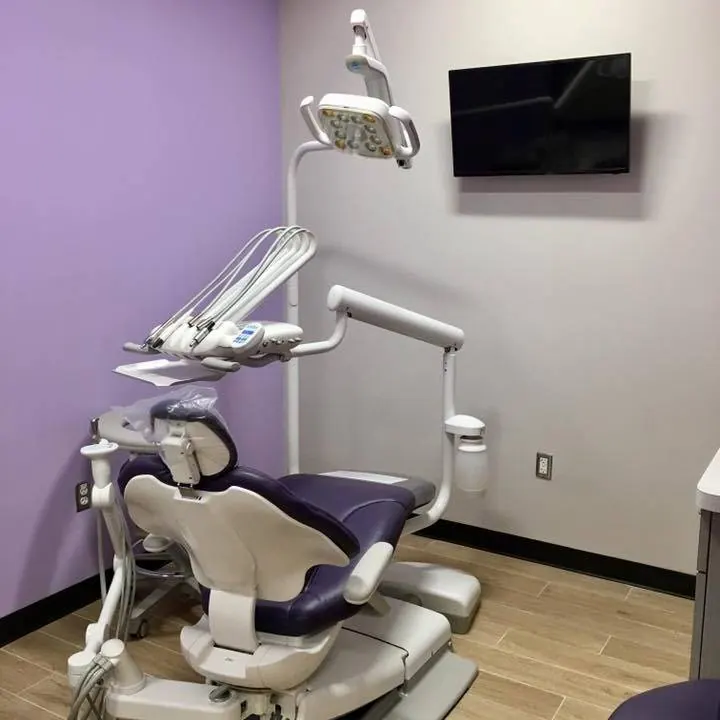
Our treatment rooms use A-dec dental chairs with a built-in piezo scaler and electric handpiece. In plain terms: the cleaning instrument uses gentle vibrations to loosen buildup efficiently, and the electric handpiece runs smoother and quieter than the high-pitched air drills many people remember.
Each room also has a TV overhead. Plenty of patients pick a show and barely notice the time — if you’re nervous, see our comfort and sedation options.
FAQ
Technology questions
Still have a question? Call (469) 706-0710 — a real person answers, in English, Spanish or Vietnamese.
Are dental x-rays safe?
Digital dental x-rays use a very low dose of radiation, lower than traditional film. We only take them when they help answer a question about your teeth, and we follow ADA guidance on spacing them based on your individual needs. Tell us if you are or might be pregnant.
Will I need a 3D CBCT scan?
Not usually. CBCT is for situations where depth matters — implant planning, impacted wisdom teeth or complex root canals. If we recommend one, we’ll explain what we’re looking for and how it changes your treatment.
Do you still use impression trays?
For most crowns and bridges we use a digital scanner instead. A few treatments, such as some dentures, may still use traditional impressions — we’ll let you know ahead of time.
Ready when you are — even on Sunday.
Request a time online in about a minute, call us, or simply walk in during open hours. We’ll take it from there.
Open 7 days a week
Walk-ins welcome · Sundays 9–1
- Monday: 9 AM–6 PM
- Tuesday: 9 AM–6 PM
- Wednesday: 10 AM–7 PM
- Thursday: 9 AM–6 PM
- Friday: 9 AM–6 PM
- Saturday: 9 AM–6 PM
- Sunday: 9 AM–1 PM