Preventive care
Dental cleanings and exams in Irving, TX
A checkup is the easiest dental visit you’ll have, and the one that keeps the others small. We clean, check and show you exactly what we see, for adults and kids alike.
- Low-radiation digital x-rays
- Intraoral camera: see what we see
- Oral cancer screening with your exam

What happens at a dental checkup
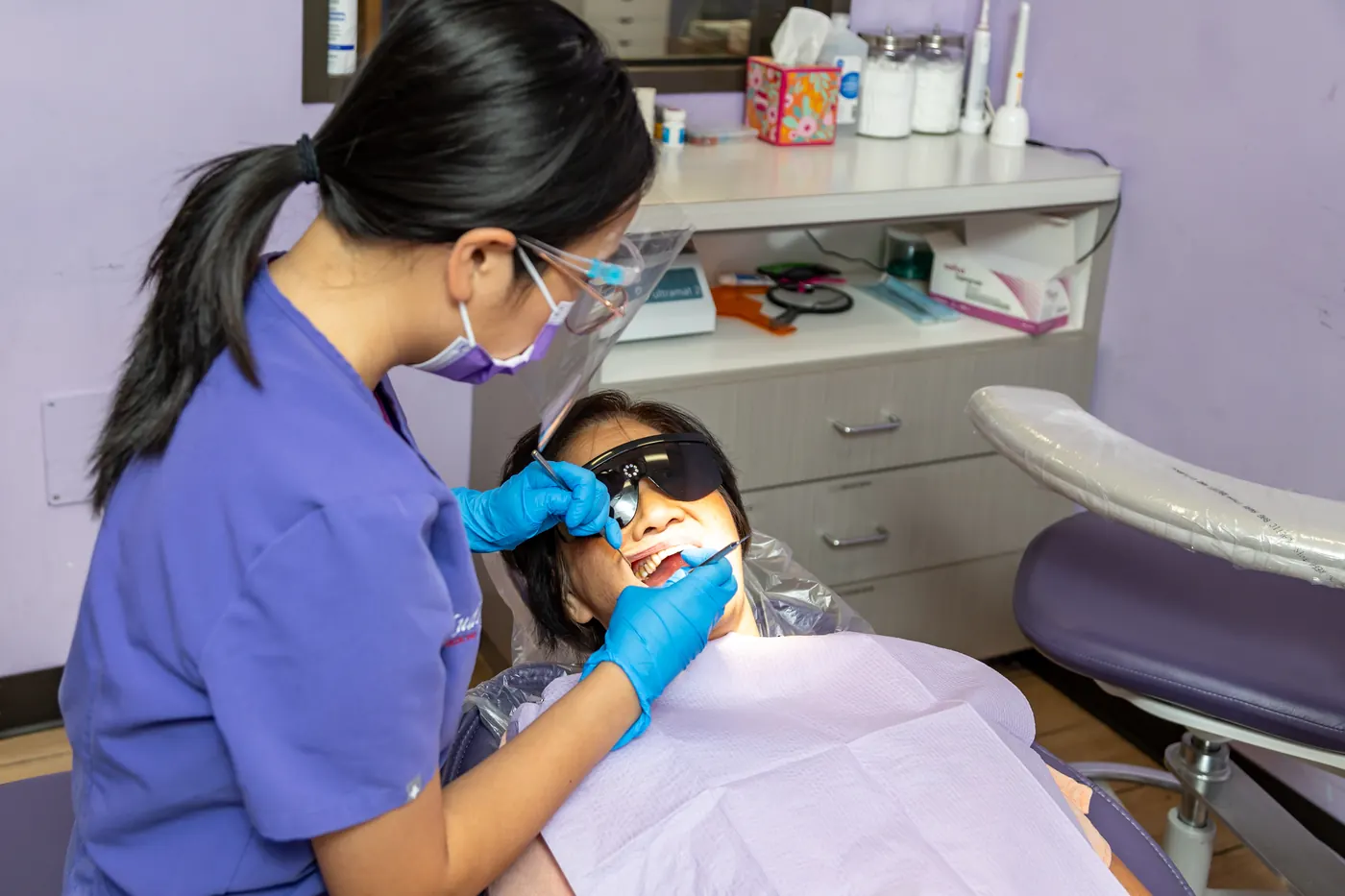
A routine visit has two parts: a dental cleaning with a hygienist and an exam with a dentist. For most adults in Irving, the whole appointment takes about an hour. A first visit with a full set of x-rays can run a little longer.
The cleaning. Your hygienist removes plaque and hardened tartar from above and just below the gumline. Our A-dec chairs have a built-in piezo scaler, which uses gentle vibration and water and is quieter and smoother than you may expect. Then we polish, floss and, when it’s helpful, apply fluoride.
The exam. The dentist checks every tooth for decay, cracks and worn fillings, measures the gum pockets around your teeth, looks at your bite and jaw, and reviews your x-rays. You’ll hear what looks healthy, what to keep an eye on and anything that needs care, in plain language and without pressure.
Signs you might need cleanings & exams
- It’s been more than six months since your last cleaning
- Your gums bleed when you brush or floss
- Bad breath that doesn’t go away
- A tooth is sensitive to hot, cold or sweets
- You’re pregnant or managing diabetes
- A sore or patch in your mouth hasn’t healed in two weeks
Digital x-rays: how often you really need them
X-rays show what a mirror can’t: decay between teeth, infection at the tip of a root, bone levels and teeth that haven’t come in yet. We use digital sensors, which need less radiation than old film x-rays and put the image on screen in seconds.
How often you need them depends on your risk, not a fixed calendar. Following ADA and FDA guidance, adults with healthy teeth and no new cavities may only need bite-wing x-rays every two to three years, while people at higher risk for cavities often need them every six to 18 months. A full set is usually taken at a first visit and then every several years. Kids often need x-rays more often because their mouths change quickly. We’ll tell you why we’re recommending any x-ray before we take it.
Oral cancer screening and the intraoral camera
During your exam, the dentist looks at and gently feels your tongue, cheeks, the floor and roof of your mouth, your throat and the lymph nodes in your neck. We’re checking for sores, patches or lumps that don’t belong. Most findings turn out to be harmless, but oral cancers are far easier to treat when they’re caught early. Tobacco, heavy drinking and HPV all raise the risk.
Our intraoral camera is a small wand that puts a magnified picture of your teeth on the screen in front of you. If we say a filling is cracked or a tooth has a dark spot, you’ll see it for yourself. It’s the most honest way we know to answer the question, “Do I really need that?” See the rest of our dental technology.
Cleanings for kids and for adults
Kids’ cleanings are shorter and gentler, with more time spent on coaching. We count teeth, polish, check how adult teeth are coming in, and show kids and parents the spots the toothbrush keeps missing. Fluoride varnish and dental sealants are two of the simplest ways to keep growing teeth cavity-free.
Adult cleanings spend more time on tartar below the gumline, gum measurements, and checking older fillings and crowns for leaks or cracks. If you have kids, our children’s dentistry page explains their visits, and you can book your cleaning and theirs on the same day.
Regular cleaning or deep cleaning?
A regular cleaning, sometimes called a prophy, is for gums that are healthy or only mildly inflamed. If your gum pockets have deepened, typically to 4 millimeters or more with tartar and bone loss underneath, a regular cleaning can’t reach the problem. That’s when we recommend scaling and root planing, often called a deep cleaning.
A deep cleaning is done with numbing, often over two visits, and smooths the root surfaces so the gums can tighten back up. It isn’t an upsell; it treats active gum disease, which has been linked to diabetes and heart disease. Learn more about gum disease treatment and how gum disease and diabetes affect each other.
How often should you get a dental cleaning?
Twice a year is a good starting point for most people, and it’s what most dental plans are built around. But it isn’t one-size-fits-all. If you’ve been treated for gum disease, we often recommend cleanings every three to four months to keep it under control. People with diabetes, pregnant patients, smokers and anyone who builds up tartar quickly may benefit from more frequent visits too.
If it’s been years, don’t let that keep you away. We won’t lecture you; we’ll start where you are. We’re open seven days, including Saturdays and Sunday mornings, so a checkup doesn’t have to cost you a day off.
What to expect, step by step
- Health history and concerns
We review your medications and any health changes, and ask what’s been bothering you.
- X-rays if they’re due
Digital x-rays are taken only when your history and risk call for them.
- Cleaning
Your hygienist removes plaque and tartar, then polishes and flosses your teeth.
- Exam and screening
The dentist checks your teeth, gums, bite and soft tissues, including an oral cancer screening.
- Your plan
You see your photos and x-rays, hear what’s healthy and what’s not, and book your next visit.
Cost, insurance & financing
Many PPO plans cover routine cleanings, exams and x-rays at or near 100%, usually twice a year. Check your plan’s details or ask us to look them up. We also accept Texas Medicaid and CHIP dental for children 18 and under, which cover regular checkups.
If you don’t have insurance, the Kudo Care Concierge Membership covers preventive visits, including dental cleanings, for a one-time $50 activation and a low monthly fee. See insurance and financing or our guide to dental care without insurance.
Patient reviews
Neighbors who’d send you our way
“Had a great experience coming here first time. Staff was very friendly and professional. Cleaning went great. Fernando was very nice and friendly, best customer service I’ve had from any dental office.”“I’ve been coming to this clinic for several years now. I like that they have different specialties all in one place, offer flexible appointment times, and are open on weekends. Everyone is very friendly.”“I always have a positive experience and I feel like my concerns are taken seriously. This makes me feel reassured and that I’m being listened to. It’s great that they open weekends!”FAQ
Cleanings & Exams: your questions, answered
Still have a question? Call (469) 706-0710 — a real person answers, in English, Spanish or Vietnamese.
How long does a dental cleaning take?
Most adult cleanings and exams take about 45 minutes to an hour. A first visit can run a little longer because we take a full set of x-rays and record a complete baseline of your teeth and gums. Kids’ visits are usually shorter. If you need a deep cleaning, that’s scheduled as its own appointment so we have time to numb and work comfortably.
Do dental cleanings hurt?
For most people, no. You’ll feel scraping and vibration, and some spots may be sensitive, especially with heavy tartar or inflamed gums. Tell your hygienist and we can slow down, use a desensitizing gel or numb a tender area. Regular cleanings tend to get more comfortable over time, because there’s less buildup to remove at each visit.
Why do my gums bleed during a cleaning?
Bleeding usually means the gums are inflamed from plaque, the first stage of gum disease, called gingivitis. The good news is that gingivitis is reversible. With a professional cleaning and better daily brushing and flossing, bleeding often improves within a couple of weeks. Bleeding that continues, or gums that are pulling away from the teeth, can be a sign of deeper gum disease.
How often do I need dental x-rays?
It depends on your risk. Adults with healthy teeth and no recent cavities may need bite-wing x-rays only every two to three years. If you get cavities often or have gum disease, every six to 18 months is more typical. Children often need them more frequently. Our digital x-rays use less radiation than film, and we only take them when the results will guide your care.
What’s the difference between a regular cleaning and a deep cleaning?
A regular cleaning removes plaque and tartar from tooth surfaces and just under healthy gums. A deep cleaning, or scaling and root planing, goes below the gumline to clean the roots when gum pockets have deepened from gum disease. It’s done with numbing and often takes two visits. Your gum measurements and x-rays tell us which one you need, and we’ll show you the numbers.
Can I get a dental cleaning in Irving on the weekend?
Yes. We’re open Saturdays from 9 a.m. to 6 p.m. and Sundays from 9 a.m. to 1 p.m., plus Wednesday evenings until 7. Booking ahead is the surest way to get time with a hygienist, though walk-ins are welcome for exams. Parents can book their own cleaning alongside their kids’, and we’re an easy drive from Las Colinas, Grand Prairie and Farmers Branch.
Keep exploring
Care that often goes with it
Sealants & Fluoride
Quick, no-shot sealants and fluoride varnish to prevent cavities in kids and high-risk adults.
Learn moreGum Disease Treatment
Deep cleanings, gingivectomy and maintenance care for bleeding, swollen or receding gums.
Learn moreTooth-Colored Fillings
Natural-looking composite fillings for cavities, chips and worn spots — usually in one visit.
Learn moreFamily Dentistry
One office for everyone, from first teeth to dentures, with weekend hours and back-to-back visits.
Learn moreReady when you are — even on Sunday.
Request a time online in about a minute, call us, or simply walk in during open hours. We’ll take it from there.
Open 7 days a week
Walk-ins welcome · Sundays 9–1
- Monday: 9 AM–6 PM
- Tuesday: 9 AM–6 PM
- Wednesday: 10 AM–7 PM
- Thursday: 9 AM–6 PM
- Friday: 9 AM–6 PM
- Saturday: 9 AM–6 PM
- Sunday: 9 AM–1 PM