Key takeaways
- Book the first visit by your child’s first birthday, or within six months of the first tooth—whichever comes first (ADA and AAP).
- Baby teeth hold space for adult teeth and help with eating and speech. Cavities in them can cause real pain and infection.
- From the first tooth, brush twice a day with a rice-grain smear of fluoride toothpaste; switch to a pea-sized amount at age 3.
- First visits are short and gentle: a quick look, a cleaning if your child is ready, fluoride and coaching for you.
When should your child first see a dentist?
Your child should have a first dental visit by their first birthday, or within six months of their first tooth coming in—whichever happens first. That’s the shared advice of the American Dental Association (ADA) and the American Academy of Pediatrics (AAP).
Many babies get their first tooth around 6 months, but timing varies a lot from child to child. If your child is already 2 or 3 and hasn’t been yet, that’s okay—just book now. Starting early simply makes it easier, because the first visit can be about getting comfortable rather than fixing a problem.
Why baby teeth matter
It’s tempting to think baby teeth don’t count because they fall out. They do count. Baby teeth help your child chew, speak clearly and smile with confidence, and they hold space for the adult teeth growing underneath. Some back baby teeth stay until about age 10 to 12.
Cavities in baby teeth are very common. The CDC reports that more than half of children ages 6 to 8 have had a cavity in their baby teeth. Untreated cavities can cause pain and infection that make it hard to eat, sleep and focus at school. The good news: most are preventable, and that’s what early visits are for.
How to prepare (you and your child)
- Pick a good time. Morning visits often work best, when little ones are rested. Avoid nap time.
- Talk about it simply and positively. “The dentist is going to count your teeth and make sure they’re strong.” Skip words like hurt, shot, needle or pull.
- Practice at home. Play “open wide” and count a stuffed animal’s teeth, or read a picture book about the dentist.
- Keep your own nerves in check. Kids pick up on worry. If the dentist makes you anxious, that’s normal—try to keep it out of the room.
- Skip threats and bribes. Praise afterward works better than promising a treat.
- Bring the basics. Your child’s insurance card, a list of medicines and allergies, and a comfort toy or blanket.
- Write down your questions. Teething, thumb-sucking, pacifiers, bottles—ask anything.
What happens at the first visit
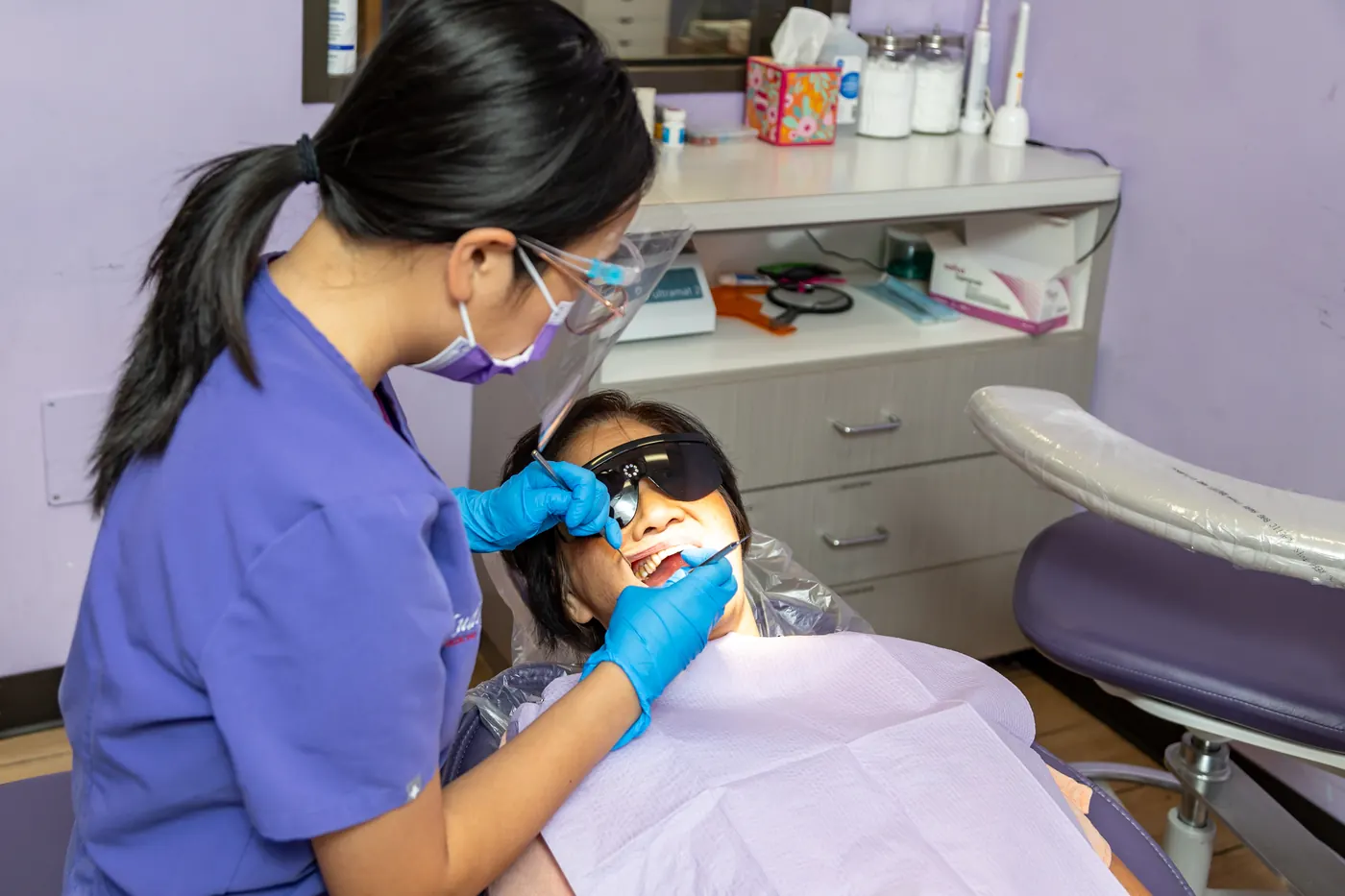
A first visit is short—often 30 minutes or less—and gentle. For babies and toddlers, the exam is often done “knee to knee”: you sit facing the dentist or hygienist, and your child lies back with their head in the dentist’s or hygienist’s lap so they can see you the whole time. Older kids can sit in the chair, sometimes on a parent’s lap.
- A quick health history. We ask about health conditions, medicines, feeding and brushing.
- A gentle look. We check teeth, gums, tongue, bite and jaw, and look for early decay like chalky white spots near the gumline.
- A cleaning, if your child is ready. For many little ones, this is just a soft brushing.
- Fluoride varnish. A thin coat painted on the teeth that sets quickly and helps protect against cavities.
- X-rays only if needed. Most babies don’t need them. When older kids do, we use digital x-rays, which use less radiation than film.
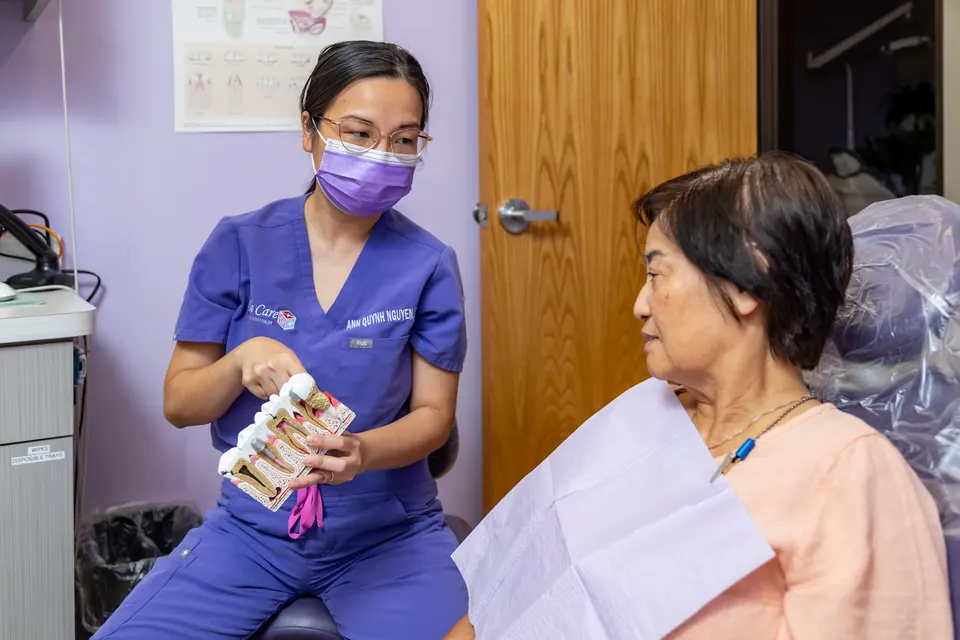
- Coaching for you. How to brush, how much toothpaste to use, what to do about bottles and pacifiers, and when to come back—usually every six months.
Some kids cry the first time. That’s normal and doesn’t mean the visit went badly. We go at your child’s pace.
Brushing, fluoride and food habits at home
- Before teeth: wipe gums after feedings with a clean, damp cloth or gauze.
- From the first tooth: brush twice a day with a soft, small brush and a smear of fluoride toothpaste no bigger than a grain of rice.
- From age 3: use a pea-sized amount and teach your child to spit, not swallow.
- Help with brushing until your child masters it—the AAP says that’s usually around age 10. Start flossing when teeth touch.
- No bottle in bed, or water only. Milk, formula and juice sitting on teeth overnight feed cavity-causing germs.
- Go easy on juice. The AAP advises no juice before age 1 and no more than 4 ounces a day for toddlers. Water between meals is best.
About fluoride: the ADA and AAP both recommend fluoride toothpaste in these small amounts. The AAP also recommends fluoride varnish every six months until age 5, or every three months for kids at higher risk. You may have seen news about fluoride: the FDA’s 2025 action targeted swallowed fluoride supplements for young children, not toothpaste or the fluoride applied in a dental office. If you have questions, ask us—we’re happy to talk it through.
Sealants and what comes next
After the first visit, plan on checkups about every six months. As your child grows, those visits add a few steps:
- Sealants are thin, tooth-colored coatings painted into the grooves of back teeth, where cavities often start. Permanent first molars usually arrive around age 6 and second molars around 12—good times to seal them. The CDC says sealants prevent up to 80% of cavities for two years and keep protecting against half of cavities for up to four years.
- X-rays once back teeth touch, to find cavities hiding between them.
- Bite and spacing checks as adult teeth come in.
- Mouthguards for sports, since knocked-out teeth are a real risk on the field.
Learn more about sealants and fluoride at Kudo. And if your child ever chips or knocks out a tooth, our guide Is it a dental emergency? explains what to do.
Tips for anxious or shy kids
Some kids march right in. Others hide behind your leg. Both are normal. A few things that help:
- Tell, show, do. We explain each tool in kid words, show it, and only then use it.
- Let them see. Our intraoral camera puts a picture of their teeth on the screen, which many kids love.
- Keep visits regular. Easy, uneventful checkups build trust far better than a first visit that’s about a toothache.
- Stay close. For little ones, sitting on your lap can make all the difference.
- Celebrate afterward with praise, a sticker or a trip to the park—not candy.
If your child has special health care needs, sensory sensitivities or a hard past dental visit, tell us when you book so we can plan the visit around them.
Coverage: Medicaid, CHIP and other options
Kudo Care Dental accepts Texas Medicaid and CHIP dental for children 18 and under, and Texas Health Steps dental checkups for Medicaid kids start at 6 months of age. We also accept most PPO plans, and uninsured patients can ask about our Kudo Care Concierge Membership, which includes preventive visits like dental cleanings. Our guide to Texas Medicaid and CHIP dental for kids explains coverage in detail, and our insurance and financing page covers the rest.
We’re open 7 days a week, including weekends, so you can schedule around work and daycare. Our team speaks English, Spanish and Vietnamese. When you’re ready, book your child’s first visit or learn more about children’s dentistry and family dentistry at Kudo.
Frequently asked questions
What age should a child first go to the dentist?
By the first birthday, or within six months of the first tooth appearing—whichever comes first. The ADA and AAP both recommend this timing. Starting early lets the dentist spot early decay, apply fluoride varnish and coach you on brushing, feeding and teething before problems start.
Do cavities in baby teeth really need fillings?
Often, yes. Some baby molars stay until age 10 to 12, and decay can spread quickly through thin baby-tooth enamel, which can cause pain, infection or early tooth loss that affects how adult teeth come in. Depending on the tooth and your child’s age, options range from fluoride treatments to fillings or stainless steel crowns.
How much toothpaste should a toddler use?
From the first tooth until age 3, use a smear of fluoride toothpaste about the size of a grain of rice. From age 3, use a pea-sized amount and teach your child to spit it out. Brush twice a day and help until your child can do it well alone, usually around age 10.
What if my child cries at the dentist?
That’s very common, especially for babies and toddlers, and it doesn’t mean the visit failed. Stay calm and close, use positive words and keep up regular visits. Most kids get more comfortable with each one, and we go at your child’s pace.
Does Medicaid cover my baby’s first dental visit in Texas?
Yes. Texas Health Steps covers dental checkups for children with Medicaid starting at 6 months of age, and CHIP covers regular checkups for enrolled children too. Kudo Care Dental accepts Texas Medicaid and CHIP dental for children 18 and under. Bring your child’s dental plan ID card to the visit.
Related services

About the author: My Phuong Tran
My Phuong believes oral health is a life skill everyone deserves to understand. As a registered dental hygienist, she is passionate about educating patients in a way that feels kind, calm and clear. Meet the team.