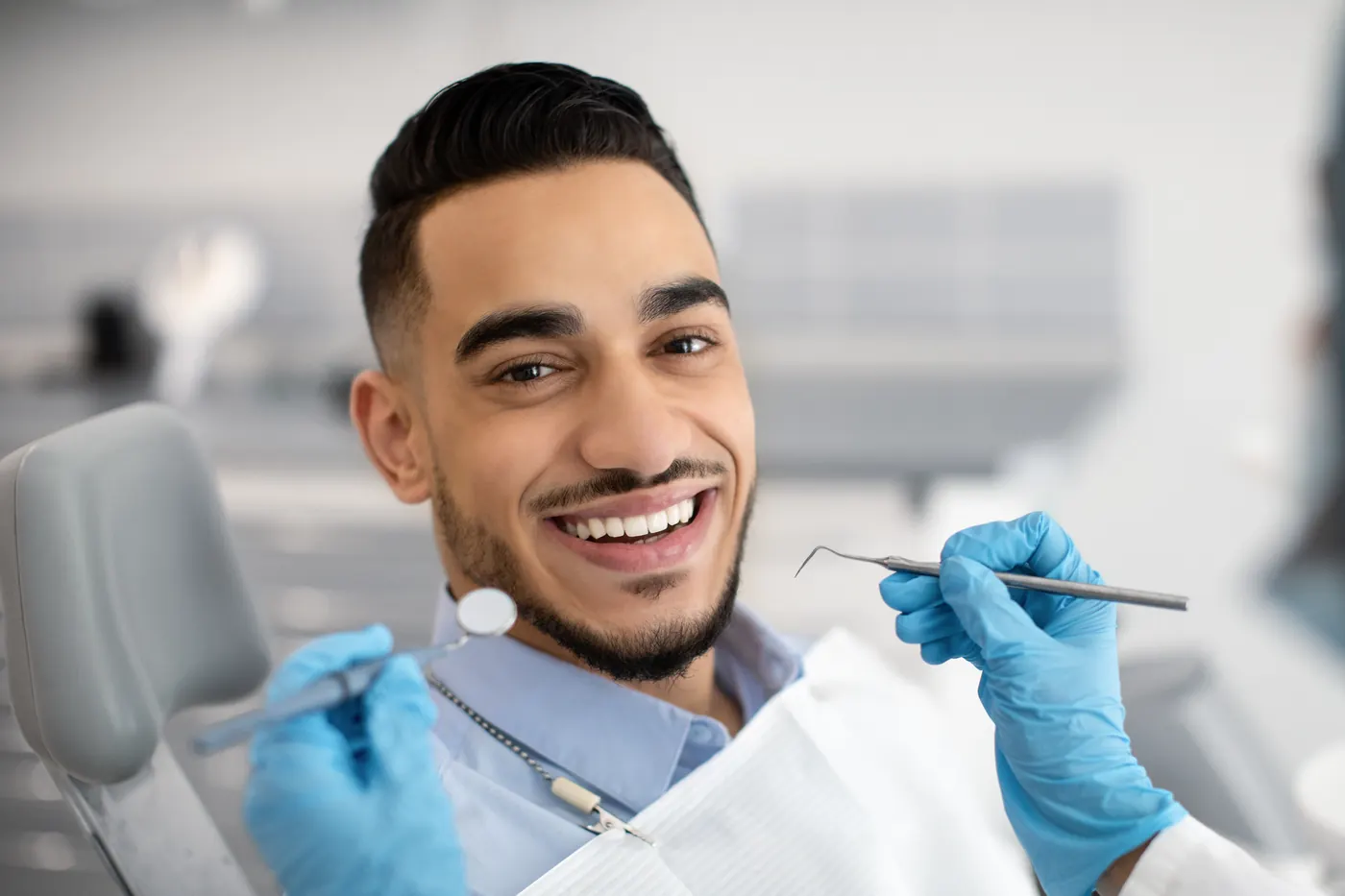
Key takeaways
- Start with professional whitening if your teeth are healthy and the only issue is yellowing or stains.
- Porcelain veneers can change shape, chips, small gaps and deep stains, but they require removing a thin layer of enamel and aren’t reversible.
- A crown is usually the better fit for a front tooth that’s cracked, heavily filled or has had a root canal.
- Whiten before any veneers or crowns: porcelain doesn’t change color, so we match it to your new shade.
The short answer
If your teeth are healthy and well-shaped but stained or yellowed, start with professional whitening—it’s faster, costs far less and doesn’t remove any tooth structure. Porcelain veneers make sense when you want to change shape, close small gaps, cover chips or hide stains whitening can’t reach, and a crown is usually the better fit when a tooth is also weak, cracked or heavily filled.
Some people come in asking for veneers when whitening alone would make them happy, and others hope whitening will fix something it physically can’t. Here’s how to tell the difference before you spend money.
What whitening can (and can’t) fix
Professional whitening uses a peroxide gel to lift stains from within the enamel. It works best on yellowish discoloration from coffee, tea, red wine, tobacco and age. According to the ADA’s MouthHealthy site, yellow teeth usually respond well, brownish teeth less so, and teeth with gray tones may not bleach at all.
A few limits to know:
- It only works on natural teeth. Crowns, veneers and tooth-colored fillings stay the same color, so an old front filling may stand out after whitening.
- It doesn’t change shape. Chips, gaps, worn edges and uneven lengths look the same, just brighter.
- One dark tooth is a different problem. A single tooth that turned gray after an injury may have a nerve issue that needs care first (see root canal vs. extraction).
You can whiten in the chair in one visit, or at home with custom trays made from digital impressions, which takes a few days to a few weeks. Over-the-counter kits with the ADA Seal can help with mild staining. Either way, have an exam first: whitening gel on an untreated cavity or inflamed gums is a recipe for sensitivity.
What porcelain veneers fix
Porcelain veneers are thin, custom-made shells bonded to the front of your teeth. Because they cover the visible surface, they can change color, shape, length and proportion all at once. They’re a good fit for:
- Chipped, worn or uneven front teeth
- Small gaps between front teeth
- Deep stains that whitening can’t lift
- Teeth that look slightly crooked or oddly shaped
The trade-off: to make room for the porcelain, we remove a thin layer of enamel, usually a fraction of a millimeter. That’s permanent. Once a tooth is prepared for a veneer, it will always need a veneer or crown. Veneers also aren’t ideal if you clench or grind heavily, have a deep overbite, or have untreated decay or gum disease. Some grinders can still have veneers with a night guard, and we’ll be straight with you about your risk.
When a crown makes more sense
A veneer covers the front of a tooth. A crown covers the whole tooth, which adds strength. If a front tooth has a large filling, a crack or heavy wear, or has had a root canal, a crown is often the more durable choice, and modern all-ceramic crowns can look every bit as natural as veneers.
Many cosmetic plans mix the two: a crown on the weak tooth and veneers or whitening on its neighbors, all matched to the same shade. Getting a crown and the teeth beside it to blend is detail work, and careful shade planning is what makes the result look like your own teeth.
Whitening vs. veneers vs. crowns at a glance
| What matters | Professional whitening | Porcelain veneers | Crowns |
|---|---|---|---|
| Best for | Yellowing and stains on healthy teeth | Shape, chips, small gaps, deep stains | Weak, cracked or heavily filled teeth |
| Tooth removed | None | Thin layer of front enamel | More, all the way around |
| Reversible? | Yes—color fades over time | No | No |
| Typical cost (estimate) | Often $400–$1,000 in office; $250–$600 for custom take-home trays | Often $900–$2,500 per tooth | Often $1,000–$2,500 per tooth |
| How long it lasts | Months to a few years; touch-ups help | Often 10–15 years or more | Often 10–15 years or more |
| Sensitivity | Common, usually temporary | Mild, for a few days after prep | Mild, for a few days after prep |
| Visits | 1 in office, or trays at home | Usually 2–3 | Usually 2 |
These are typical DFW and national ranges, not our fees. Your exact cost depends on how many teeth you treat, the material and whether you need other work first. Insurance rarely covers cosmetic whitening or veneers, but it may cover part of a crown when a tooth needs one for health reasons. We give you a written estimate before treatment, and financing through Cherry, Affirm or CareCredit is available, subject to credit approval—see insurance and financing.
Sensitivity: what to expect
Temporary sensitivity is the most common side effect of whitening, according to the ADA. It usually shows up as quick zings with cold drinks and fades within a few days of finishing. To keep it manageable:
- Brush with a toothpaste for sensitive teeth for a couple of weeks before and during whitening
- Wear take-home trays for shorter sessions, or skip a day if your teeth feel touchy
- Don’t overdo it—extra gel or longer wear doesn’t mean whiter, just more sensitive
For veneers and crowns, we numb thoroughly for the preparation visit, and most patients feel pressure, not pain. Mild sensitivity for a few days afterward is normal.
Our tip: whiten first, then match
Good to know: Porcelain doesn’t change color once it’s made. If you’re thinking about whitening at all, do it before veneers or crowns. Give your new color about two weeks to settle, then we match the porcelain to it. Whiten afterward and your natural teeth will lighten while the porcelain stays put, leaving a mismatch.
The same goes for older tooth-colored fillings on front teeth: plan on possibly updating them after whitening so everything blends.
How to decide
Start with what bothers you most in the mirror. If it’s color alone, whitening is the low-risk first step. If it’s shape, chips or gaps, veneers are worth a conversation. If a tooth is also weak or heavily restored, ask about a crown.
At a cosmetic consultation, we photograph your teeth with an intraoral camera so you can see what we see, check your gums and bite, and walk through options at different price points. If you’re due for a cleaning, do that first, since removing surface stain sometimes changes the plan. You can book a consult any day of the week, including Sundays.
Frequently asked questions
Can you whiten veneers or crowns?
No. Whitening gel only works on natural enamel, so porcelain veneers, crowns and tooth-colored fillings keep their original color. That’s why we recommend whitening before any porcelain work. If existing veneers look darker than your natural teeth, the fix is usually a professional polish for surface stain or replacing the veneer, not bleaching it.
How long do veneers last compared with whitening?
Professional whitening typically lasts from several months to a few years, depending on how much coffee, tea, red wine and tobacco you use, and touch-ups keep it bright. Porcelain veneers often last 10–15 years or more with good care. Avoid biting hard objects, and wear a night guard if you grind.
Does professional whitening damage enamel?
Used as directed, professional whitening and ADA-Accepted products are considered safe for enamel. The usual side effects are temporary sensitivity and mild gum irritation. Problems tend to come from overuse, or from bleaching teeth that have untreated cavities or gum disease, which is another reason to have an exam first.
Does insurance cover veneers or teeth whitening?
Usually not, because they’re considered cosmetic. Crowns are different: PPO plans often cover part of a crown when it’s needed to protect a damaged tooth. We’ll check your benefits and give you a written estimate. Financing through Cherry, Affirm and CareCredit is available, subject to credit approval.
Related services

About the author: Dr. Carl Prince
Dr. Carl Prince earned his dental degree from Midwestern University in Glendale, Arizona, graduating magna cum laude. He is passionate about restoring smiles and helping patients feel confident, with a focus on aesthetic dentistry — especially crown and bridge work. Meet the team.